
TL;DR
Forget traditional political persuasion. True, lasting belief change is incredibly rare because our brains fiercely defend beliefs tied to our identity. The science reveals only two consistent paths to fundamentally alter political beliefs:
- A “Shock to the System”: This can be a literal brain shock (like tRNS stimulation) or a profound, identity-shattering external event (like economic collapse) that makes an entire worldview incoherent.
- Completely Changing Your Friend Groups: Your social circle fundamentally shapes and sustains your core beliefs; new, trusted reference groups can lead to new, lasting beliefs.
Most political coperations cannot, and do not, achieve either of these, meaning genuine conversion is often beyond their control.
Political Persuasion: Shocks and Friends
I’m trying to write a book about political persuasion. Maybe I should say I’m thinking about writing a book about political persuasion, yet again. (Kudos to all that have the discipline to achieve this milestone!)
I’ve spent over 20 years building political persuasion programs, and I’ve learned an uncomfortable truth: most of what we call “persuasion” is either preaching to the converted or strengthening opposition.
In reality, campaign operatives don’t really care about true conversion. It’s about Tuesday’s results, not beliefs or attitudes. Get your people to the polls, suppress the other side’s turnout (I mean affect the other side motivation / enthusiasm), move the needle 2-3 points in swing districts. That’s the game.
NGOs and associations are different. They’re in it for the long game. They actually want to change attitudes and beliefs. And they can have some success with generational change, if they reach younger people before issues crystallize into political identity. But is that really persuasion? Or just waiting for the old generation to die off so public opinion seems to change rapidly?
Here’s the truth: Real belief change, the kind that creates lasting political realignment, happens only at critical thresholds most campaigns never reach.
It takes one of two things, or both combined:
- Shocks to the system (personal or societal)
- Completely changing your friend groups
And the science backs this up.
Why Minds Stay Set
Before we explore the science of change and persuasion, let’s take a quick detour exploring why minds don’t change and remain set.
It’s human nature. We’re drowning in information, so we use shortcuts (heuristics) to make sense of the world. One of the most powerful: elite cues from people we trust.
We join groups. Or groups claim us. Either way, once we’re in, we come to trust the leaders, adopt the signals, internalize the worldview. These groups become identities. We don’t hold just one identity, but some become important to us. Some VERY important.
And here’s the trap: once beliefs become tied to identity, we want to be good members. We don’t want the pain or threat of expulsion, and humans experience social rejection as physical pain. To be a good member is to be one with the group. So, once we are in, we outsource our thinking. We stop processing ideas deeply because that is hard and take time. We don’t evaluate. We defend. We trust the group.
When threatened or pressured, we don’t reconsider. We double down, deepening our ties to the group. The stronger the affiliation, the stronger the fight.
It’s a self-reinforcing loop. The more you defend, the more invested you become. The more invested, the more threatening any challenge feels. And we surely don’t like outsiders bringing disagreement and “threats” to our adopted thinking.
The loop tightens.
And for those who aren’t really into politics, they still outsource their thinking to people they trust, or worse, to whatever they heard most often and most recently. They don’t care enough to put in the effort.
We see it in today’s political polarization, driven largely by affective polarization. It’s not primarily about issue disagreement. Frankly, most poeple haven’t take the time or energy to think deeply about issues – we are busy!) It’s about not liking the existence of people who threaten our reinforced identities.
This is why true persuasion in politics fails. You’re not arguing against a belief. You’re threatening an identity. And brains treat identity threats like physical danger. They activate defense, not deliberation. Or you are arguing with people that don’t care enough to even argue.
Reason be damned.
This self-reinforcing loop explains why I’ve watched millions of dollars in persuasion campaigns accomplish nothing when it comes to true persuasion (actually changing hearts and minds, converting beliefs.) Or worse, backfire spectacularly.
Yes, campaigns can move turnout. They can activate base voters or suppress opposition. They can anger people so bad they show up to vote against someone or something. That’s mobilization, not true persuasion. That’s about intensity and logistics, not belief change.
But we know actual, real conversion, where people abandon old beliefs and adopt new ones can happen. Seemingly, very quickly and even at a mass scale.
The neuroscience shows exactly when and how the loop breaks, and you’re probably not going to like the answers.
Here is What You are Not Going to Like About Persuasion
The science says it takes one of two things, or both acting together:
- Large, external, normally uncontrollable, earth-shattering shocks to the system
- Radically changing your friend group(s)
Let me show you the evidence.
The Brain Stimulation Study: Literal Shocking
When neuroscientists applied transcranial random noise stimulation (tRNS) to voters’ prefrontal cortex while they watched campaign videos, something remarkable happened.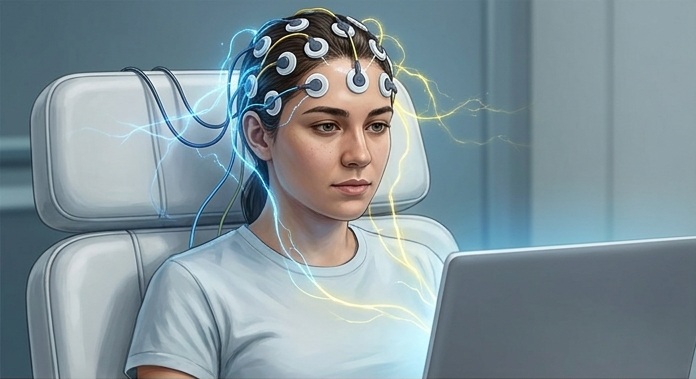
Political beliefs shifted. Significantly.
Chawke and Kanai (2016) conducted a study where participants received Transcranial Random Noise Stimulation (tRNS), which enhanced activity in the dorsolateral prefrontal cortex (DLPFC), a brain region known for its role in cognitive control and executive function. The results were stark: participants with DLPFC stimulation showed an average political belief change score of 12.01, significantly higher than the 0.80 observed in the control group.
The researchers’ conclusion? “Strongly held political beliefs appear to be surprisingly susceptible to alterations of neuronal regulatory processes”.
I read a lot of studies, and I am not sure I have laughed out loud at an academic sentence in my life. That one got me. “surprisingly susceptible”!
While the study makes an important point: political beliefs aren’t as stable as they feel. They’re downstream of brain states that can be dramatically altered by external forces.
But the funny part to me: we just need some electrodes to literally shock people into changing their minds.
The Other Types of Shock: Earth-Shattering, Soul-Searching, and Existential Shocks
Consider the Midwest, where mass political conversion seemed to occur between 2012 and 2020. White working-class voters in the Rust Belt, once reliably Democratic, shifted decisively towards the Republican Party,  voting for Trump by massive margins. This is an example of what an ‘earth-shattering shock’ can look like in the real world.
What happened? Economic shock on a scale that shattered assumptive frameworks.
Free Trade and import competition from low-wage countries devastated local labor markets. When a county’s import exposure increased by one standard deviation, total employment fell by around 3.2 percent. Manufacturing jobs disappeared. Entire communities collapsed.
And here’s the key: the individuals who changed their political affiliation weren’t random. They were low-skilled workers in the manufacturing sector. Higher-skilled individuals and service sector workers didn’t change their political affiliations in response to the same trade shock.
You lose your job, you lose your ability to provide for your family, you start questioning basic, core assumptions:
- “What in the hell is life all about?”,
- “What does it all mean?”,
- “I was told to work hard and follow the rules, and I would be rewarded. Is that all bullshit?”,
- “I believed that if I worked hard, I would be better off than my parents. Is the American Dream a myth?”
When your lived experience makes your political worldview literally unable to explain reality, the identity loop shatters.
And this is critical: not threatened, but shattered.
You stop defending the old beliefs, and you actively seek new ones that restore a world view that is coherent.
Sometimes that process is healthy, sometimes destructive.
Other shattering events:
9/11, Covid
Sidenote: We are almost certainly going to need to start asking questions like “Is artificial intelligence going to shatter this country like trade policy did?”
Mama Was Right? Don’t like Your Circumstances? Change Your Friends!

Between 1935 and 1939, political psychologist Theodore Newcomb studied every student at Bennington College, a small liberal arts school in Vermont.
The students came from affluent, conservative families. The faculty were predominantly liberal social activists. Over four years, most women’s attitudes changed from conservative to liberal.
But here’s what makes this study even more interesting: Newcomb followed up 25 and 50 years later. The attitude changes stuck. In the 1984 presidential election, 73 percent of Bennington alumnae preferred Democrat Walter Mondale over Republican Ronald Reagan, compared with fewer than 26 percent of women of the same age and educational level.
I remember my graduate professor presenting this study, and asking why or how?
I gleefully answered knowing I was going to make short work of this discussion, “They were indoctrinated by those liberals!”
The professor disagreed and asked me to ignore my intuition, and refer to the notes about the study because he was sure I had done my readings.
The short and correct answer is “they selected new reference groups—friends and husbands—who supported the attitudes they developed in college”. Those who married conservative men were more likely to be politically conservative decades later.
It is the friend group, stupid. 
In a recent study, Changes in Political Attitudes are Associated with Changes in Neural Responses to Political Content, researchers “tested this by leveraging a unique political crisis”.
The mechanism is clear: we select reference groups that share our attitudes, and then those reference groups develop and sustain our attitudes. We trust them. Change the group, change the beliefs. Permanently.
“political instability that potentially caused participants to shift their attitudes towards the videos. Analysis revealed a neuralplasticity hierarchical pattern: primary sensory regions showed minimal changes, while limbic, reward, and memory networks exhibited the most substantial differences between sessions. Specifically, the amygdala, hippocampus, and caudate demonstrated activity patterns that tracked changes in interpretation. Notably, neural changes in these regions correlated with shifts in political in-group affiliations, but not statistically significantly with changes in ideological positions.“
Said in another way, we stuck people into machines undergoing a political crisis, and watched the brain change over 2.5 years and the changes lined-up with shifts in in-group affiliations!
Conclusion
I told you that you were unlikely to like the science, and now you see why. True persuasion, the kind that creates a lasting shift in hearts and minds, is a profoundly rare and challenging feat.
It’s not about winning an argument; it’s about altering deeply ingrained identities, and our brains are hardwired to defend those identities, not to deliberate when they’re under threat.
The neuroscience and psychology, reinforced by real-world examples, suggests that this fundamental identity loop only breaks under extreme conditions.
Either a literal “shock to the system,” like targeted brain stimulation, or an “earth-shattering” external event that renders an entire worldview incoherent.
Or, more socially, through a radical realignment of our core “friend groups” or our trusted reference points that shape and sustain our beliefs.
For most political organizations, operating within tight timelines and rigid budgets, this scientific reality is a harsh one. True conversion is beyond the scope of their typical tactics.
Frankly, it’s often outside their control. Perhaps the best any “smart organization” can do is recognize and “leverage” those rare, uncontrollable moments of systemic shock when identities are already fractured and people are actively seeking new coherence.
The science doesn’t offer easy answers, but it offers clarity on the monumental task of genuine political persuasion.
We might indeed be left to ponder if the only truly effective, direct means of political belief change involves literal electrodes and brain shocks.
Some days, I am seemingly all for it.
Studies Mentioned in this Post (References)
Boiman, G., Ohad, T., Zvi, Y. et al. (2026). Changes in political attitudes are associated with changes in neural responses to political content. Communications Psychology, 4, 29. https://doi.org/10.1038/s44271-026-00395-x
Chawke, C., & Kanai, R. (2016). Alteration of political belief by non-invasive brain stimulation. Frontiers in Human Neuroscience, 9, 621. https://doi.org/10.3389/fnhum.2015.00621
Kossowska, M., Szwed, P., Czarnek, G. et al. (2026). Neural correlates of belief change in political and non-political domains among left-wing individuals confronted with counterarguments. Scientific Reports, 16, 4895. https://doi.org/10.1038/s41598-026-35397-6
Newcomb, T. M. (1943). Personality and social change: Attitude formation in a student community. Dryden Press.
Newcomb, T. M., Koenig, K. E., Flacks, R., & Warwick, D. P. (1967). Persistence and change: Bennington College and its students after 25 years. Wiley.